by Jack
1. Adjust for seasonality
Seasonality is a big factor when it comes to selling travel. Users wouldn’t be looking for a northern hemisphere skiing holiday for July so why would you have a campaign for this running? Seasonality data should be used to inform how your campaigns are set up to maximise potential during the relevant travel season. Historical performance data can show which times of the year bring higher search volume for different locations and keywords (if historical data isn’t available to your tools such as Google’s keyword planner will give you search volume data you need). Campaign segmentation is seasonality’s best friend. Build segmented campaigns which follow a single topic such as destination or activity so they can be easily paused and enabled when search volume dictates. This will not only mean you keep up with shifts in search volume, but you can also distribute your budget easier across campaigns.
2. Target high purchaser intent
There is a plethora of keywords you can target to engage users at different stages across the customer journey. Some will always have a higher chance of converting than others because of different user intent. A travel company with destinations in Italy could target the keyword “best time to visit milan” as this is relevant to their product offering. This keyword is unlikely to convert as they are informational, the user is just researching and is far from converting. With paid search specifically, target transactional keywords. These are keywords such as “book trip to milan”, or “book london to milan flights”. Focusing spend on keywords that drive transactions will mean that your budget stretches further and drives higher conversions. If you want to target users earlier in the customer journey use audience-led channels such as paid social, display, and YouTube.
3. Personalisation
Trying to make your ads as relevant to the user’s search query is one good way to increase CTR. This means including the search query in the headline and within the description. The example below shows the results for the search query “hotels in london”.
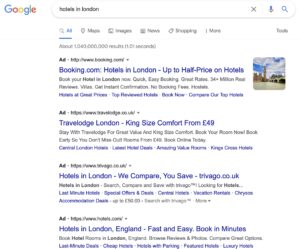
The search query “hotels in london” is matched in the headlines of all four paid results. The relevance to the search query is furthered in the descriptions and image extensions, with two serving what is London’s most well-known landmark, the Elizabeth Tower (Big Ben). Search query personalisation means ad groups should contain tightly grouped keywords. Rather than having an ad group that contains keywords such as “hotels in london”, “hotels in manchester”, and “hotels in liverpool”. Not only will ad copy be specific to the keyword and location, but extensions can be added at ad group level which gives more personalisation to the search query. Build an overarching campaign but have ad groups separated by location.