Need more value from search? Book a free discovery call 📞

Fixings Store
Building a Scalable Google Ads Engine from Scratch

2x AWARD
NOMINATED

Fixings Store launched in March 2023 as a new e-commerce business in the construction and fixings sector. Entering a market dominated by Screwfix, Toolstation, Power Tool World and ITS, the brand had no recognition, no historical data and a cautious budget.

Facing a blank slate, we focused on getting the fundamentals absolutely right. First, we structured the Google Ads account with a clear “Test → Scale → Control” campaign framework.

This meant splitting campaigns by their role in growth: small Test campaigns explored new keywords and products, Scale campaigns poured budget into the winners that showed promise, and control campaigns maintained consistent performance on proven core traffic.

This structured approach gave us both room to experiment and the ability to double down on what worked without risking the whole budget on untested ideas.

Services PPC
Industry Retail

Fixings Store launched into a crowded market with no historical account data, no established bestsellers, and a budget that could not afford to waste ad spend.

On top of that, the catalogue mixed high-ticket tools with lower-cost consumables, each with very different margins and basket values. Without a commercially led structure, Google Ads would naturally drift spend towards higher-priced items that looked attractive on the surface, even if they were harder to convert or less profitable.

The real challenge was building a paid engine that could learn quickly without risking performance. We needed a setup that could identify profitable products and search terms fast, control spend tightly, and scale only when returns justified it. That meant structuring campaigns around what actually drives sustainable growth: average order value, margin, and product type, then using those signals to guide bidding, budget allocation, and the path from testing to scaling.

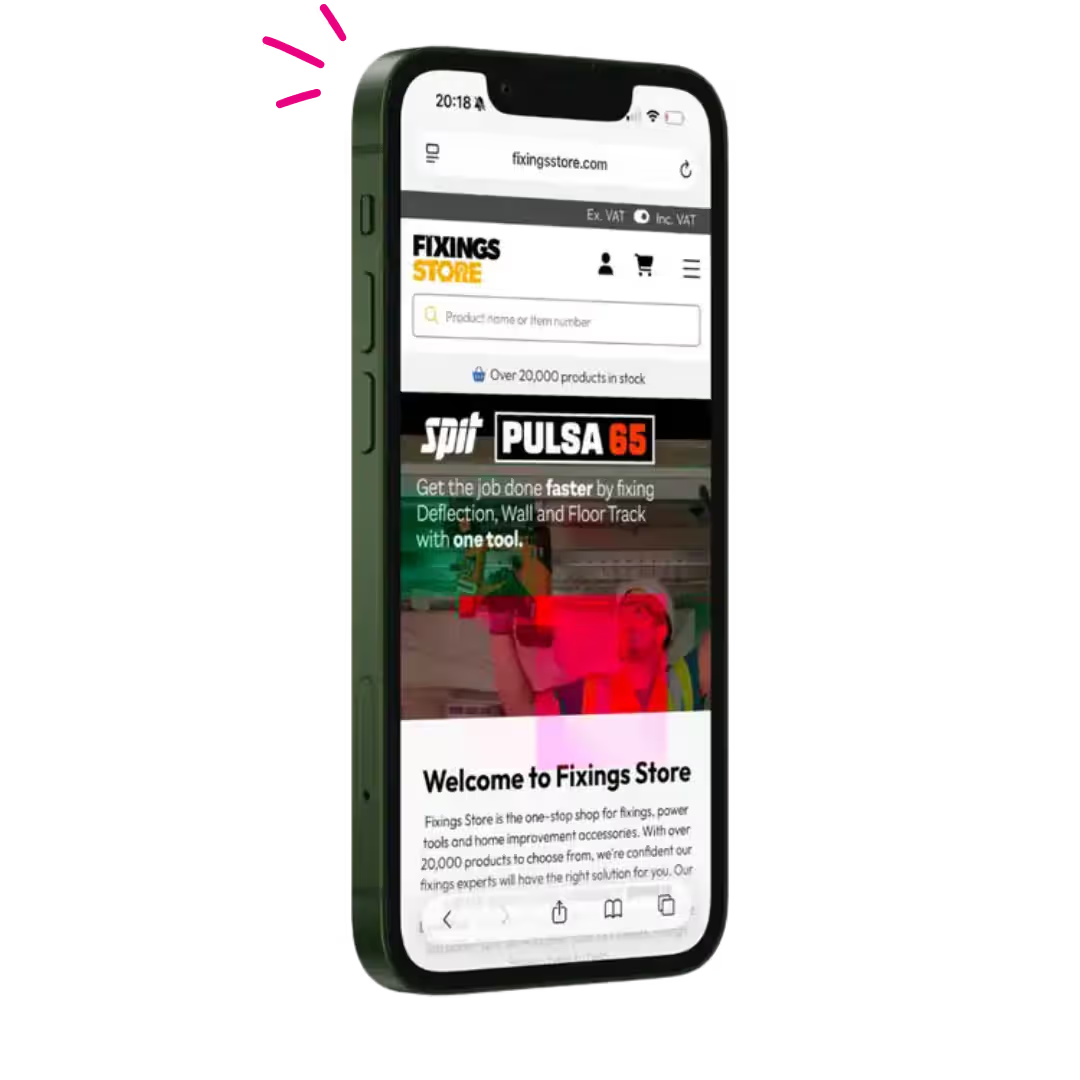
iPhone displaying Salience search marketing website with SEO services

In parallel, we segmented our campaigns by key commercial metrics – average order value (AOV), profit margin, and product type. This segmentation ensured that budget allocation and bidding strategies were guided by each segment’s real revenue potential and profitability.

For example, products with higher margins or bigger basket values could justify a higher cost-per-click, whereas lower-margin items were kept on tighter budgets. By aligning campaigns with AOV and margin, we made sure every pound of spend was directed to areas with the best payoff. This commercially-led structure prevented overspending on low-value products and put the financial upside at the heart of our strategy.


Discovery Journey

Next, we tackled the problem of finding winning products and search terms as efficiently as possible. We launched a broad Shopping campaign as a discovery layer to cast a wide net across the client’s product range. The idea was to let Google’s Shopping algorithm surface which products and search queries would convert best, given we had no prior data.

Walking away from DeWalt and Makita, we used Shopping as discovery, surfacing niches such as Paslode (39.4 ROAS) and Spit (8.5 ROAS).

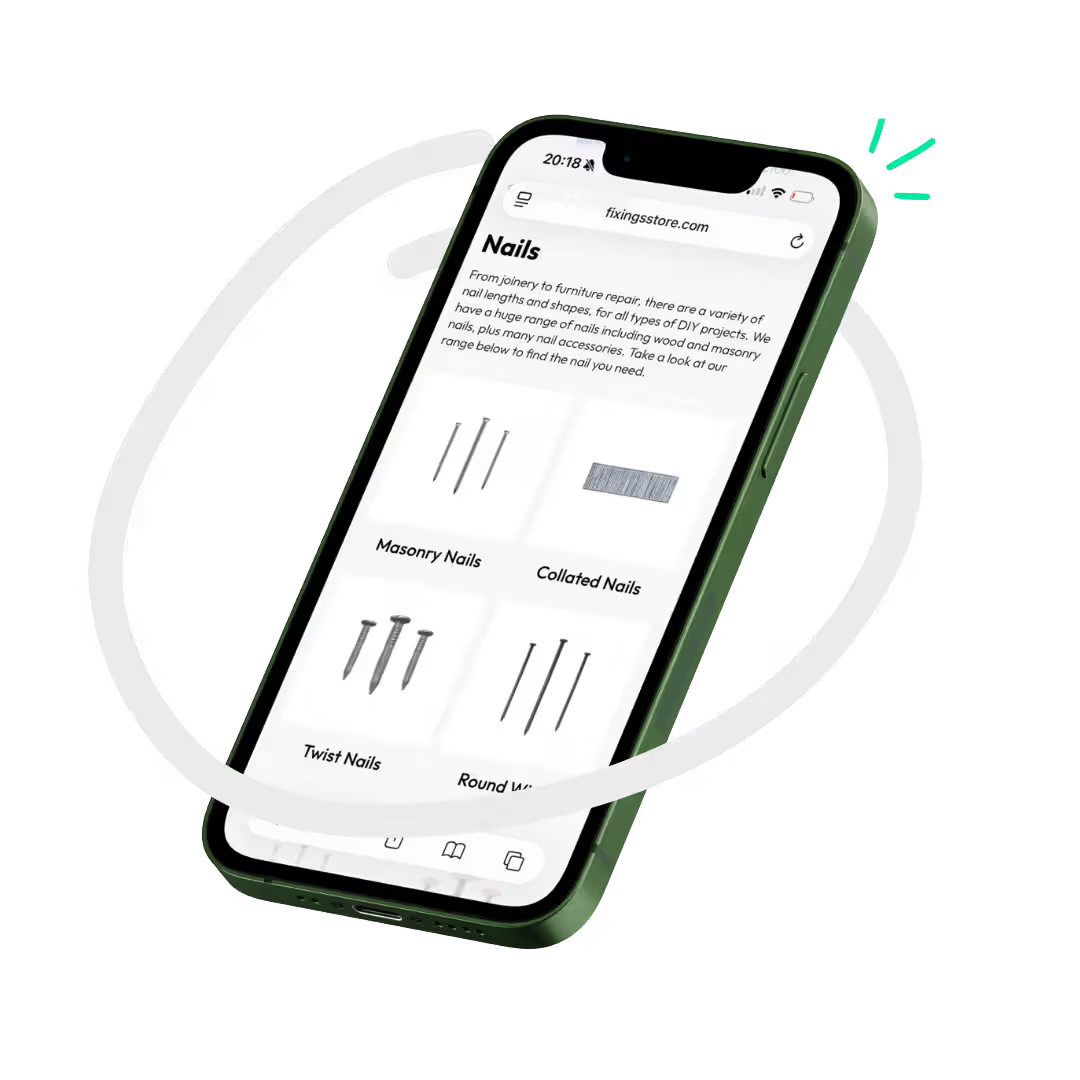
Mobile website mockup on smartphone screen showing responsive design layout

This Shopping campaign gathered valuable data on what sold. Once we spotted the early “winners” – products or search queries that generated profitable sales – we immediately moved to scale them up. We spun those winners out into their own dedicated campaigns, leveraging Google’s Performance Max (PMax) and targeted Search ads to maximise their reach.

In practice, the Shopping campaign acted like a scouting ground, and as soon as a profitable opportunity emerged, a PMax or Search campaign took it to the next level. This ensured we rapidly capitalised on successful products instead of leaving potential revenue on the table.

Kaizen

Kaizen is a Japanese term for “change for the better” or “continuous improvement. Much the same, this wasn’t a set-and-forget account – it required hands-on optimisation every single week. We combed through the search terms and product performance data regularly. If certain keywords, queries, or products were spending money but not converting, we cut them out quickly to stop wasteful spend. At the same time, when we found a product that was taking off, we broke it out into its own ad group or campaign (as mentioned, via PMax or a focused Search campaign) to give it more budget and attention as a bestseller.

Fixings Store started with no brand recognition, no historical data, and a cautious budget in a market dominated by household names.

To compete, we built a Google Ads engine designed to learn fast and scale safely. The “Test → Scale → Control” framework gave us a structured way to explore new opportunities, double down on winners, and protect consistent performance on core traffic. Layering in AOV and margin segmentation ensured spend was always tied back to profitability, not just volume.

The outcome was a step-change in efficiency and growth, year on year.

302%

YoY Revenue Increase

100%

Conversion Rate Increase

84%

ROAS Increase


Reach out to discuss how we can help your brand stay ontop


Invite us to pitch


More Work

View all
cases