




Need more value from search? Book a free discovery call 📞

Award-winning search marketing that makes your brand visible wherever your customers ask questions.

Trusted by some of the UK's leading brands

brita logo
Client logos showcasing Salience PPC agency partner companies
Logos of brands managed by Salience PPC agency
the entertainer logo
dreams beds logo

GEO is an exciting new part of SEO. The fundamentals remain the same: visibility through strong entities, crawlable websites, authoritative content, and genuine third-party signals. The difference is in how consumers interact with generative AI. What used to be keywords is now conversational search.

We benchmark your visibility across the LLMs that matter, audit what they claim about your brand, show you where competitors are taking recommendations that should be yours, and then do the work to change it.

GEO is grounded in the same fundamentals as SEO; the channel is what’s new. Those fundamentals take years to build, and we’ve been building them for clients since 2009.

Invite us to pitch
About us


Generative engine optimisation is the practice of making your brand visible in AI-generated answers. When someone asks ChatGPT, Gemini, Claude, Perplexity or Google’s AI Mode a question your business should answer, GEO determines whether you get named, cited and recommended.

You’ll see it called LLM optimisation, AIO, answer engine optimisation or half a dozen other acronyms. The industry hasn’t settled on a name yet. We have settled on what works, and it looks remarkably familiar.

LLMs learn about your brand from the open web. They read your site, your coverage, your reviews, the places your name appears next to the topics you want to own. If search engines can find, understand and trust you, AI models generally can too. If they can’t, no amount of “GEO hacks” will fix it.

Don’t just take our word for it. When Google was asked whether SEO is still relevant for generative AI search, its official guidance answered: “In short, yes!” Google’s generative AI features are grounded in the same core ranking and quality systems that power Search, and Google’s own documentation describes optimising for generative AI as still being SEO.

This is usually the first question, and it deserves a proper answer rather than a guess. Our LLM visibility audit tells you:

  • How often your brand appears in AI answers for the prompts your customers actually use
  • What AI is actually saying about you, including anything it’s getting wrong
  • Which competitors are being recommended in your place, and why
  • Whether AI crawlers can even access your site (you’d be surprised how many robots.txt files quietly block them)
  • How much traffic LLMs are already sending you, tracked properly in GA4
  • Where your content, entity coverage and brand signals fall short of the sources LLMs prefer to cite

You get a clear baseline, a competitor benchmark and a prioritised plan. No mystique, no invented metrics.

Trust runs both ways in AI search, and both directions matter to your bottom line.

First, machines have to trust you. LLMs are built to avoid confidently recommending rubbish, so they lean on sources with demonstrable expertise, consistent facts across the web, real authorship, and authority earned through coverage and citations. If that sounds like E-E-A-T, that’s because it is. The trust signals Google has spent a decade rewarding are the same ones AI systems use to decide who gets cited. We’ve been building them for clients the whole time.

Second, your customers trust what AI tells them. When ChatGPT confidently describes your product range, quotes your delivery times or compares you to a competitor, people take it at face value. If the model has stale, thin or plain wrong information about you, that answer is quietly costing you customers who never even reach your site. Part of our job is finding those errors, tracing where the models picked them up, and correcting them at the source.

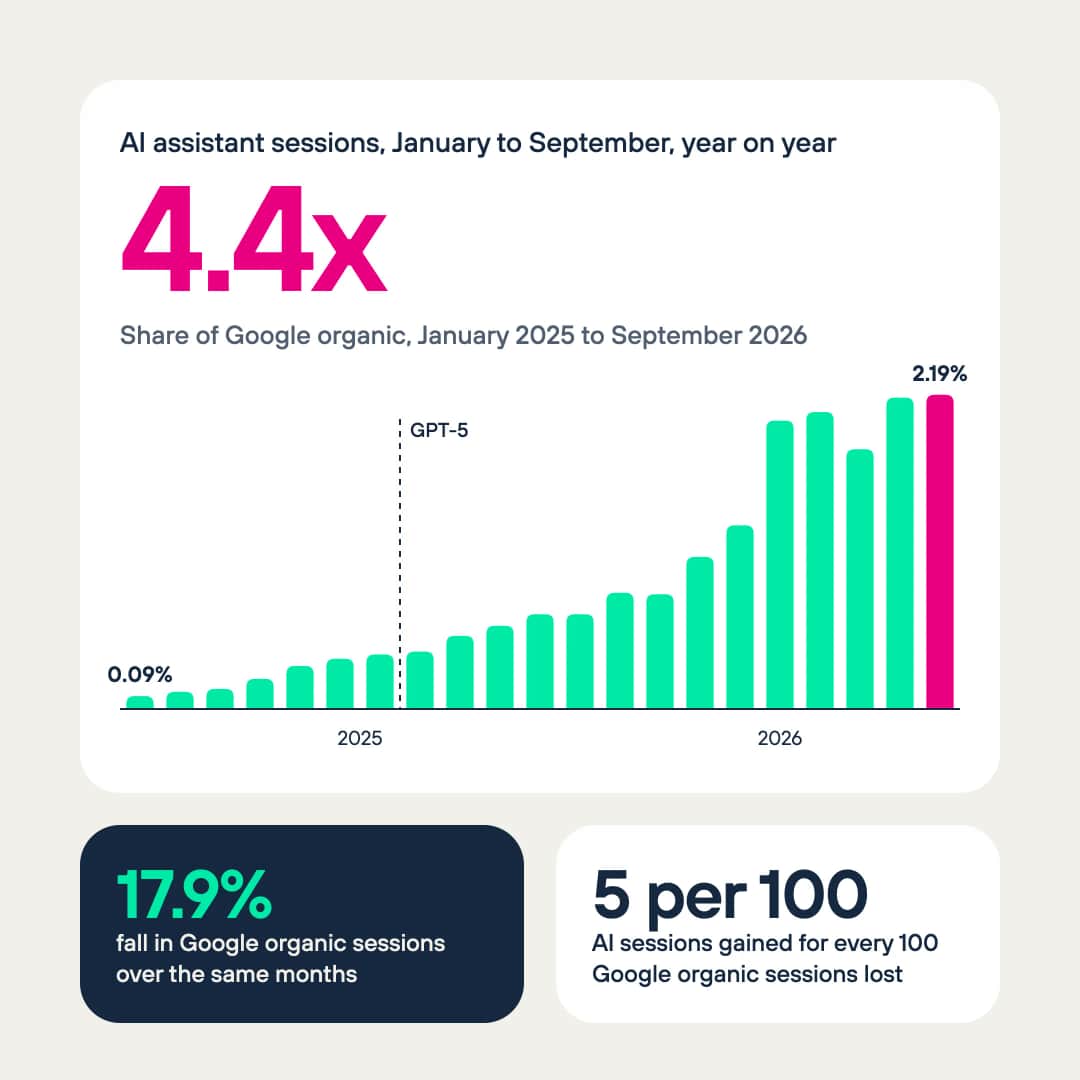
Let’s not dance around it. AI answers resolve more queries without a click, and plenty of sites are watching informational traffic slide.

Here’s what that panic misses. The visitors’ LLMs do arrive with the comparison already done, which is why AI-referred traffic typically converts at a far higher rate than classic organic. The prompts themselves are an insight goldmine, full sentences of real intent that no keyword report ever gave you.

So we measure what matters now: share of answer, branded demand, revenue and conversion rate, alongside the traffic.

We keep saying the fundamentals are the same, so here’s the mechanics. AI answers are retrieved from the same index as your rankings. When you ask Google’s AI Mode a question, it fans that question out into a set of related searches, pulls the best pages from the index, and builds its answer from what it finds. Rank well for the cluster of questions around your topic, and you’re feeding the answer. The things that get you there are the things that have always worked:

Technical foundations. Crawlable architecture, clean source order, schema and structured data, fast pages, and a page that’s indexed and snippet-eligible, which is Google’s own stated requirement for appearing in its AI features.

Content that answers real questions. LLMs cite sources that cover topics thoroughly, factually and in a structure machines can parse. Google’s guidance singles out unique, first-hand, non-commodity content as the biggest long-term factor in AI visibility. Topical authority has gone from an SEO buzzword to the price of admission.

Digital PR and brand mentions. Models recommend brands with genuine authority, and Google explicitly warns against manufactured mentions. Our digital PR team earns the real thing: coverage, reviews and links from sources people already trust. The same campaigns that drive referring domains now also shape what AI says about you.

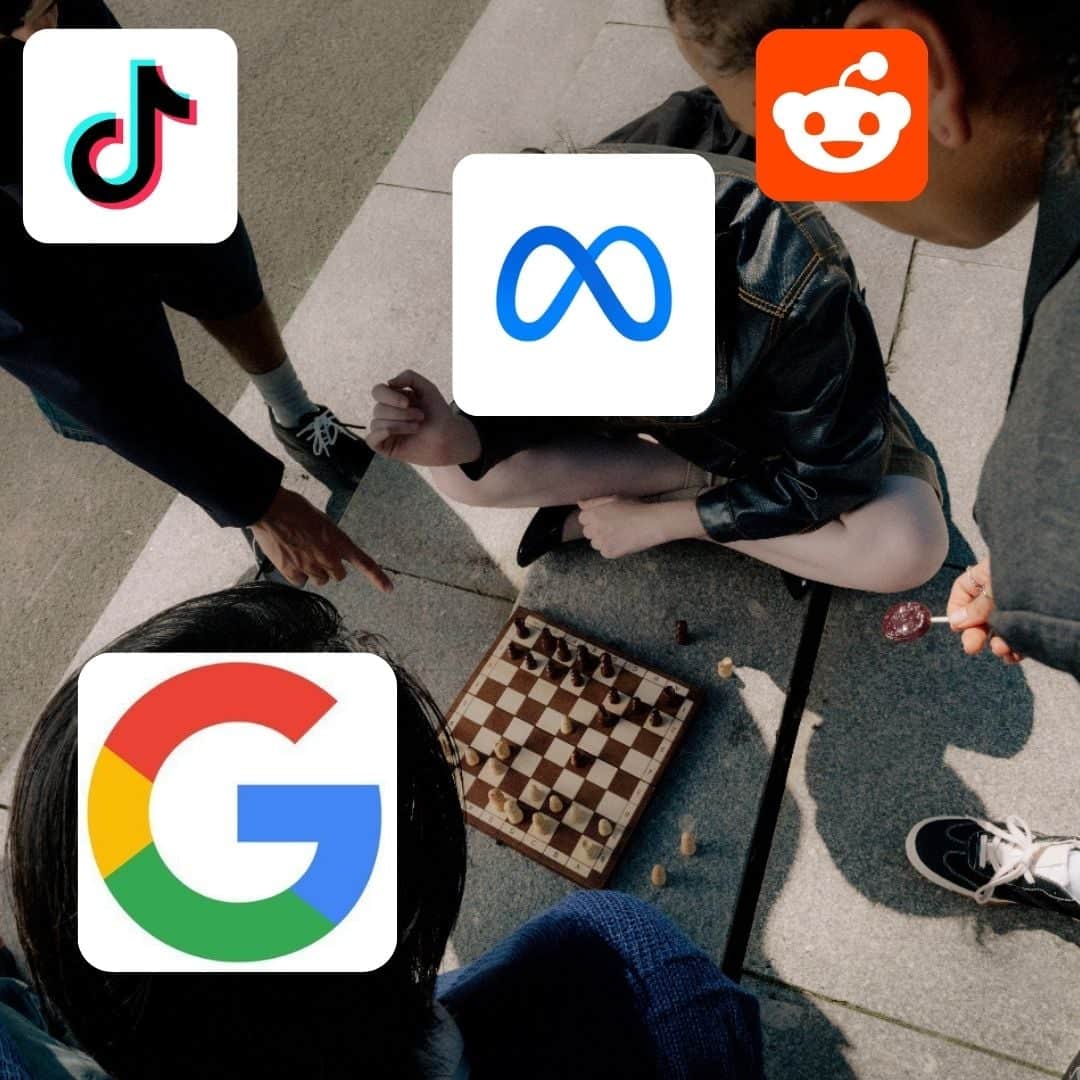
Audience and channel mapping. Research journeys now sprawl across Google, TikTok, Reddit, YouTube and LLMs, and adoption varies wildly by audience. Your nan isn’t asking Claude for slipper recommendations. Yet. We map where your customers actually do their research, weigh your investment accordingly, and tell you straight if AI search is a smaller priority for your market than the hype suggests. When your audience gets there, you’ll already be in the answer.

Brand accuracy and citation analysis. It’s one thing to be mentioned, another to be represented correctly. We audit what AI answers claim about your brand, products and pricing, flag misinformation and outdated facts, trace where models picked them up, and fix the sources so the record gets corrected.

Measurement and reporting. We track LLM-referred sessions, revenue and conversion rate in GA4, monitor your AI citations and share of voice over time, and keep a running eye on brand accuracy. GEO isn’t a one-off project; models retrain, sources shift, and competitors catch up, so we report it all on our regular calls in numbers your board will understand.

We’ve spent 17 years building exactly these things for some of the UK’s biggest brands. Over 350 clients, 35+ industry awards, and case studies with revenue figures attached. GEO gives that work a second place to pay off.

Salience Google Analytics agency office at Newgate House, historic red brick building

Case Studies

View all
cases
Salience - Top Digital Agency
European Search Awards 2026 Finalist logo
EU search awards winner - Salience
European 2023 Search Awards Winner badge with yellow arrow design
UK Agency Awards 2023 Finalist badge

Reach out to discuss how we can help your brand stay on top.

Book a discovery call

All of our search marketing expertise is available when it comes to hitting your ambitious performance targets.

Together, we will find your untapped potential, set our targets, and hand-pick a multichannel spring team with the right blend of skills for your unique growth opportunities.

What expertise can be in your sprint team?