Tile Stores 2025: what the data tells us and how shoppers are changing
If you sell tiles, you’re likely feeling a shift in the way consumers are searching and buying.
This is your 2025 Tile Stores Industry Analysis. A single read that blends our Salience Index data with on-site learnings from a standout performer, Porcelain Superstore. We’ll unpack the tile industry growth rate we’re seeing in search, which brands are pulling ahead, and where demand is drifting. If you want the raw data and every chart, you can get the free 69-page report for deeper insight.
Is the tiles sector growing or shrinking?
Industry variance (YoY): +2%
This figure reflects the average change in organic visibility across the sector year on year. In other words, on balance, tile search traffic is slightly up versus last year.
What that reveals
A modest positive variance says two things at once: Demand is still there, but gains are lumpy. Some stores are accelerating while others are sliding. That pattern fits what we hear from in-house teams: steady browsing, longer decisions, and more time spent comparing options on social and marketplaces before committing on-site. In short, growth is available, but it’s uneven and increasingly brand-led.
What to take from this: The winners pair consistent technical foundations with a buying journey designed for a tactile product. Samples, shipping clarity, and visual reassurance now sit alongside rankings as primary growth levers.
Which tile stores are the key players right now?
Below is a condensed look at visibility changes for well-known brands. Where you see large swings, that’s search behaviour shifting between generic intent and brand-driven discovery.
Selected visibility shifts (Aug 2025 vs Aug 2024)
| Brand | Visibility (Aug ’25) | Visibility (Aug ’24) | YoY change | vs market |
|---|---|---|---|---|
| Porcelain Superstore (porcelainsuperstore.co.uk) | 54,653 | 16,890 | +224% | +222% |
| Mandarin Stone (mandarinstone.com) | 52,624 | 51,931 | +1% | −1% |
| Quick-Step (quick-step.co.uk) | 43,265 | 33,270 | +30% | +28% |
| CTD Tiles (ctdtiles.co.uk) | 39,425 | 52,060 | −24% | −26% |
| Walls and Floors (wallsandfloors.co.uk) | 41,023 | 85,771 | −52% | −54% |
| Porcelanosa (porcelanosa.com) | 35,497 | 31,252 | +14% | +12% |
| Tileflair (tileflair.co.uk) | 21,911 | 14,664 | +49% | +47% |
| Tile.co.uk (tile.co.uk) | 21,899 | 26,473 | −17% | −19% |
| Al-Murad (al-murad.co.uk) | 18,652 | 6,397 | +192% | +190% |
| Royalestones (royalestones.co.uk) | 19,319 | 12,737 | +52% | +50% |
| Floormart (floormart.co.uk) | 16,807 | 10,013 | +68% | +66% |
What these changes in organic visibility mean
First, the scale of Porcelain Superstore’s growth signals a demand shift from “big-box solves everything” towards specialists who reduce friction after the click. When choice is overwhelming and tactile reassurance matters, shoppers reward sites that make sampling, colour matching and room visualisation effortless.
Second, brand gravity matters. Porcelanosa posts steady gains thanks to strong brand salience. Meanwhile, broad catalogue players like Walls and Floors and CTD Tiles face pressure on generic rankings: the battleground where AI-enhanced SERPs, marketplaces, and social discovery squeeze click-through rates. Look to hit the middle of the funnel harder. Build pages and journeys that solve very specific buyer anxieties (size, slip resistance, grout pairing, underfloor heating) rather than only chasing head terms.
Who’s top of mind in the tile industry?
When we blend branded search with owned social presence, we get a picture of mental availability: who buyers think of first.
Brand awareness leaders (brand searches and owned social)
| Rank | Brand | Monthly branded searches | Owned social score |
|---|---|---|---|
| 1 | Topps Tiles | 201,000 | 172 |
| 2 | Porcelanosa | 22,200 | 1,459 |
| 3 | Mandarin Stone | 22,200 | 204 |
| 4 | Fired Earth | 18,100 | 201 |
| 5 | Tile Giant | 40,500 | 73 |
| 6 | UK Flooring Direct | 27,100 | 93 |
| 7 | Tapi | 14,800 | 148 |
| 8 | Tile Mountain | 33,100 | 64 |
| 9 | Ca’ Pietra | 6,600 | 269 |
| 10 | CTD Tiles | 18,100 | 94 |
| 11 | Porcelain Superstore | 9,900 | 171 |
| 12 | Quick-Step | 6,600 | 255 |
Brand vs performance, and why social still counts
You can be everywhere in the SERP and still lose the sale if you’re not the name people type. Topps Tiles remains the category’s brand awareness anchor, while Porcelanosa’s social footprint accelerates brand search.
Notice Porcelain Superstore sits just outside the top 10 on this measure, yet it’s a visibility winner. That mix (growing performance plus rising branded demand) excites us about what they’ve got coming.
Directional play: Build top-of-funnel awareness and reduce friction in the journey. Category pages that answer style questions and product pages that handle objections will do more work than generic head-term chasing.
Keywords: What’s trending?
To translate “tiles market size” into something useful for digital, we look at search demand. Here are the products gaining or losing interest.
Emerging product searches
| Query | UK monthly searches | Interest trend |
|---|---|---|
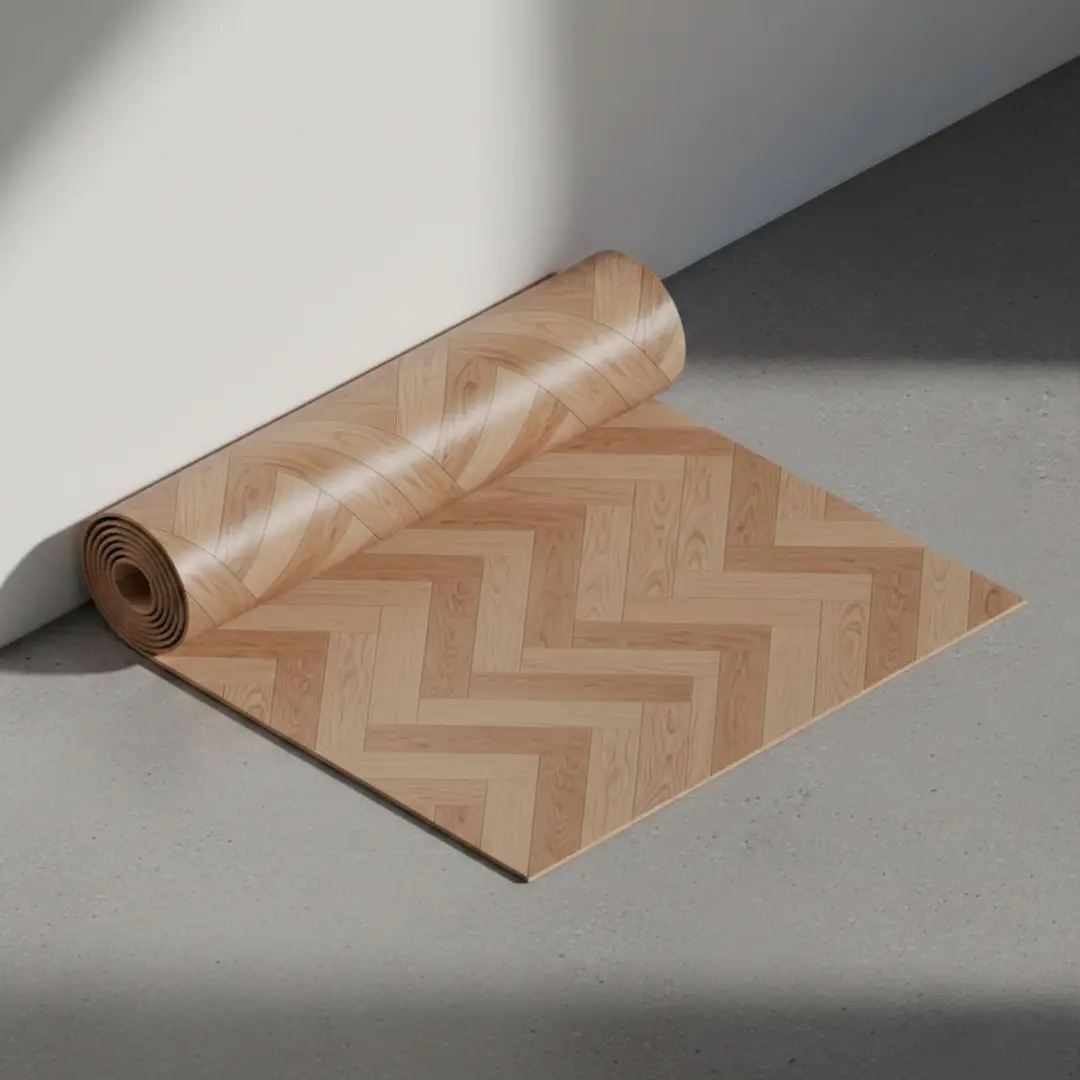
| herringbone tiles | 6,600 | +15% |
| kitchen tiles and splashbacks | 4,400 | +8% |
| limestone floor tiles | 4,400 | +7% |
| tiles black | 3,600 | +17% |
| mosaic bathroom tiles | 2,900 | +35% |
| pink bathroom tiles | 2,900 | +13% |
| porcelain paving slabs | 2,900 | +6% |
| brick tiles for wall | 2,900 | +9% |
| LVT floor tiles | 2,400 | +23% |
| small bathroom tiles | 2,400 | +13% |
| stone effect tiles | 2,400 | +9% |
| beige bathroom tiles | 1,900 | +24% |
Receding product searches
| Query | UK monthly searches | Interest trend |
|---|---|---|
| bathroom tiles | 74,000 | −13% |
| floor tiles | 49,500 | −18% |
| kitchen tiles | 33,100 | −13% |
| vinyl floor tiles | 14,800 | −28% |
| outdoor tiles | 12,100 | −18% |
| bathroom wall tiles | 12,100 | −18% |
| mirror tiles | 8,100 | −29% |
| deck tiles | 6,600 | −36% |
The shift from broad to specific (and tangible)
Broad, catch-all queries are slipping while specific looks and contexts (for example, herringbone, mosaic bathroom, porcelain paving slabs) rise. That’s a classic maturing category signal. Shoppers have gone past “tiles near me” and into “help me picture this exact finish in my space.” Expect more intent to splinter by room size, finish and pattern.
Practical implication: This splintering rewards retailers who treat PLPs as buying guides, not just grids. Filters, imagery, and copy should mirror how people decide, not just what the product is.
Which keywords provide an opportunity?
High-competition battlegrounds
| Keyword | UK monthly searches | Competitiveness |
|---|---|---|
| floor tiles | 28,000 | 21 |
| porcelain tiles | 11,000 | 24 |
| luxury vinyl tile | 2,200 | 22 |
| LVT tiles | 1,700 | 30 |
| ceramic tile | 700 | 24 |
| wall and floor tiles | 1,200 | 48 |
| porcelain patio tiles | 1,800 | 15 |
| stone floor tiles | 1,500 | 22 |
| natural stone tiles | 1,200 | 24 |
| luxury tile flooring | 100 | 37 |
Opportunity (low-competition) terms
| Keyword | UK monthly searches | Competitiveness |
|---|---|---|
| bathroom tiles | 45,000 | 6 |
| wall tiles | 9,900 | 8 |
| garden tiles | 4,000 | 4 |
| vinyl tiles | 4,800 | 11 |
| patio tiles | 3,400 | 4 |
| victorian tiles | 3,500 | 5 |
| porcelain paving slabs | 2,300 | 7 |
| stone tiles | 2,000 | 14 |
| cork floor tiles | 1,300 | 6 |
| cheap bathroom tiles | 1,000 | 6 |
Navigating 2025 SERPs without burning budget
Tile stores’ SEO in 2025 is less about piling into head terms and more about showing up where buyers make decisions. High-competition keywords still matter for authority, but you’ll extract more revenue by owning specific, lower-friction phrases that match how people buy. Treat these opportunity terms as category “spines” and build deep PLPs with rich filters, size and fit guidance, and dynamic content blocks for FAQs and aftercare.
Also note how SERP real estate is changing. AI-enhanced results and shopping modules are swallowing clicks on generic phrases. When you target lower-competition terms with higher intent, you earn a larger slice of a smaller pie.
Speed, trust and reviews
Page speed still matters. A one-second delay in load time can reduce conversion by around 7%. On mobile, that’s fatal if your sample journey asks users to complete too many steps.
Trust signals are now more part of the purchase path than ever before. External review profiles (like Trustpilot), visible guarantees (returns, warranties), and clear credentials reduce hesitation, especially for higher-value orders or fragile goods. Tiles are heavy, breakable and high-consideration. Shoppers worry about colours, delivery damage and returns.
Spotlight on Porcelain Superstore
The data shows Porcelain Superstore moving decisively against the market. Its visibility more than doubled year on year. What’s driving that? From the outside in, three things stand out:
- Sample-to-purchase flow that feels built for humans.
- Clear CTAs, friction-light sample ordering, and content that sets expectations on shade, finish and grout. That reduces the “will it really look like the photos?” fear.
- Category pages with real buyer logic. The site helps you narrow quickly by look, size and pattern, especially helpful on trending intents like herringbone or mosaic bathroom.
- Brand cues without the hard sell.
- Social proof sits close to the decision, and imagery focuses on rooms and schemes over sterile close-ups. The effect: confidence.
Why this works: Human-first experiences recognise the tactile barrier and close it with samples, transparent delivery and returns, plus copy that sounds like a sales associate who actually lays tiles.
Lessons you can apply
For tactile products, the job isn’t just ranking. It’s translating a feel through the screen. That means:
- Treating samples as a product in their own right with fast fulfilment, tracked delivery and guidance on testing in different lights.
- Using micro-copy to answer real pre-purchase questions (substrate suitability, cutting difficulty, slip ratings, cleaning).
- Making returns visible and fair. The less “what if” anxiety, the more likely browsers become buyers.
How search behaviour is evolving in 2025 for tile stores
Click-through on broad terms is softening as SERP features expand and AI answers crowd above the fold. At the same time, product discovery bleeds into social and creator content. For tiles, where buyers need to picture the finish, that shift magnifies two behaviours:
- Pre-search inspiration on social. People decide on looks (herringbone, checkerboard, micro-cement, blush pink) before they even hit Google. Meet them with finished-room imagery and helpful language when they do.
- Mid-funnel research on site. Once on your domain, they want answers fast: slip ratings, rectified vs non-rectified edges, grout contrast, sealing requirements, and underfloor heating compatibility. The brands that front-load this clarity keep users from bouncing back to creator content for reassurance.
Practical takeaways from our Tiles Industry Report
- Own PLPs for terms like garden tiles, Victorian tiles and porcelain paving slabs with content depth and UX that mirrors how people decide.
- Win the middle. Treat category pages as buying guides and make PDPs resolve objections fast. Reflect trending looks in navigation and content modules.
- Design for speed and trust. Faster loads, visible guarantees, embedded reviews. These remove purchase friction for big, fragile orders.
- Measure what matters. Visibility is the proxy for reach, but optimise for qualified clicks. Watch conversion and return rates.
Want the full tables, rankings and context?
Where next?
Want the full tables, rankings and context? Get the free 69-page report for deeper insight.
Curious how these findings translate into real revenue? Head to our e-commerce SEO hub to learn more about the services mentioned or Get in touch with our team to see how we can help you.