by Sean
How can this be? Is this more evidence of increasingly zero-click SERPs? Or is it that such behaviour has become more multi-platform and more considered than ever before? Or is it that search behaviour is now more multi-platform than ever before?
The report contradicts itself
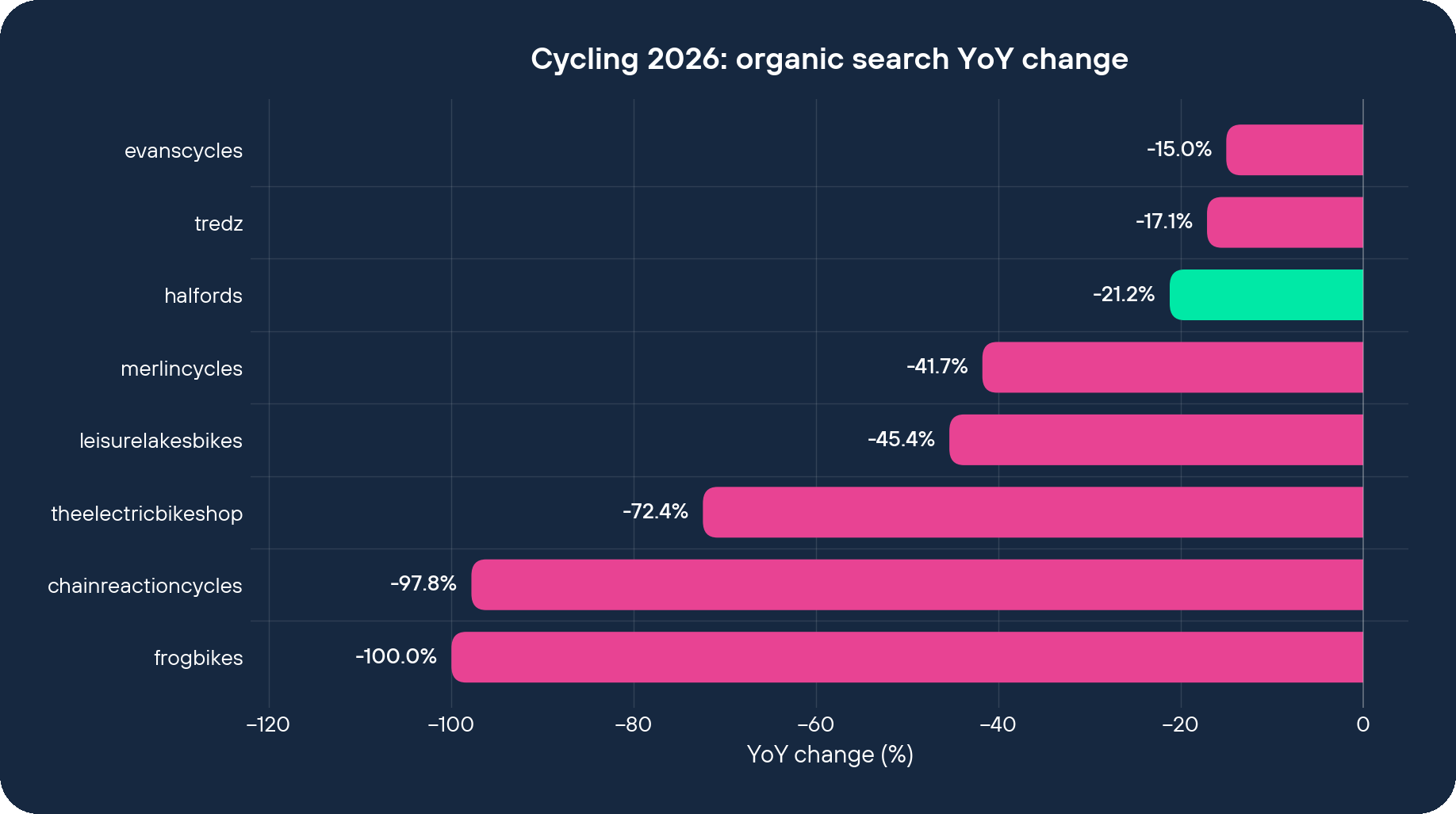
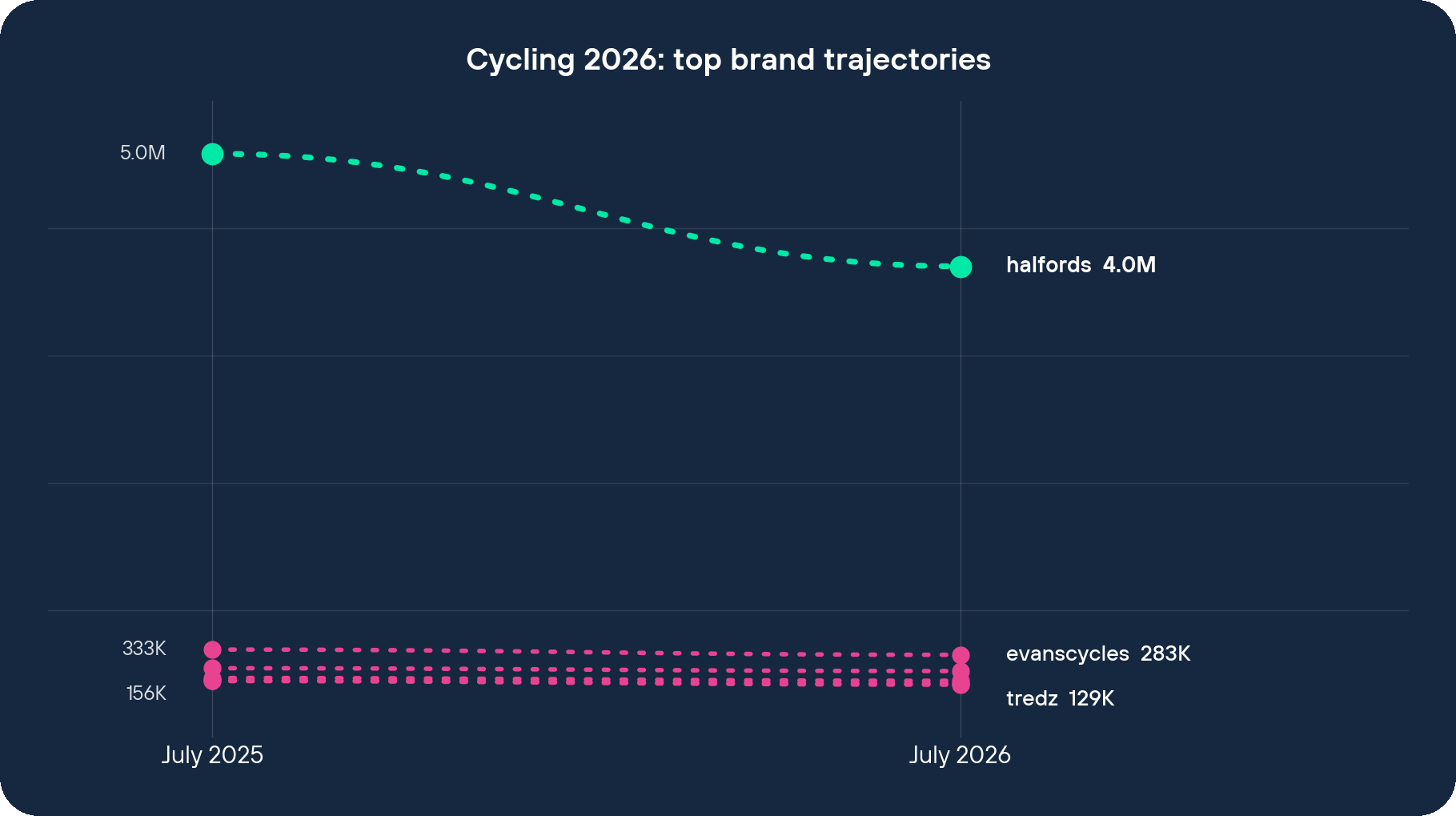
The 2026 Salience Cycling Index says organic search visibility across the sector fell 18% between July 2025 and July 2026. Twelve pages later, our Search Volume Trends chart shows interest in cycling running ahead of last year in 29 weeks out of 29, up 10.4% over the comparable window, with week 29 at 430, the highest weekly reading in the four-year series.
Demand up a tenth.
Traffic down nearly a fifth.
A gap of roughly 28%…
Nobody stopped searching
Think about what a person actually does now when they want an electric bike. They type “best pedal assist bike uk”. They get an AI summary that names four bikes, explains the 250-watt rule, tells them assistance cuts out at 15.5mph, and mentions you have to be 14 to ride one. They read it. They’re satisfied. They never click.
Or at least never on any of the e-commerce sites that we track in this report.
- They go to Reddit threads.
- They go to YouTube reviews.
- They go to LLMs.
Then, three weeks later, they search “cube stores” and buy.
If the discovery search no longer produces a click, then the click you do get is arriving much later, from someone who has already decided.
Which means your organic traffic is getting smaller and more valuable at the same time, and your conversion rate is quietly flattering you while your reach collapses.
Evidence
Across all 312 domains the report tracks, aggregate traffic went from 7,753,861 to 6,277,941, down 19.0%. Ninety-eight domains gained a combined 174,772 visits. Two hundred and eleven lost a combined 1,650,692. The gains recover 10.6% of the losses. Roughly nine tenths of the traffic that left the tracked market did not reappear anywhere else in it.
Meanwhile, we are seeing an interesting shift in buying behaviour and product preferences through keyword search volumes.
- “pedal assist bike” — 2,400 searches a month, up 95%
- “pedal assist electric bike” — 1,900 a month, up 84%
- “pedal electric bike” — 480 a month, up 59%
- “mountain bike pedal assist” — 480 a month, up 32%
And in the other direction, from the same report’s Receding Products table:
- “electric bike conversion kits” — 22,200 a month, down 23%
- “ebike kits” — 8,100 a month, down 45%
- “electric motor bike” — 27,100 a month, down 12%
- “electric dirt bike” — 22,200 a month, down 18%
- “electric mountain bike” — 18,100 a month, down 13%
Why the law became the interesting part
Why the legal words? Because the law finally became the interesting part.
A road-legal electrically assisted pedal cycle in Great Britain has to have pedals you can propel it with, a motor rated at no more than 250 watts continuous, and assistance that cuts out at 15.5mph.
So buyers started asking the spec question directly. “Pedal assist” is not a nicer way of saying “e-bike”. It’s a buyer checking whether the thing is legal before they spend three grand on it.
Further reading
- Litelok’s growth without brand demand, A small cycling accessories brand grew its organic visibility on category language rather than brand searches, which is the route open to anyone who claims the 5,310 pedal assist terms.
- 2026 Fitness Equipment Industry Report, Fitness equipment buyers search the same mix of plain category words and direct-import brand names, so the comparison shows how far that mix runs outside cycling.