 by Jack
TL;DR
A third of the UK businesses we spoke to couldn’t trust or prove what their ads returned. These are the eight standards I hold every Google Ads and Microsoft Ads account to. Each one ends with a question to put to your agency, and there’s a scorecard at the end to rate your own account.
“Check the homework.”
That’s what one business owner asked us for this year. They had nobody in-house who could check their agency’s work. So they had no idea if their money was being spent well.
That one stuck with me. Because they weren’t alone.
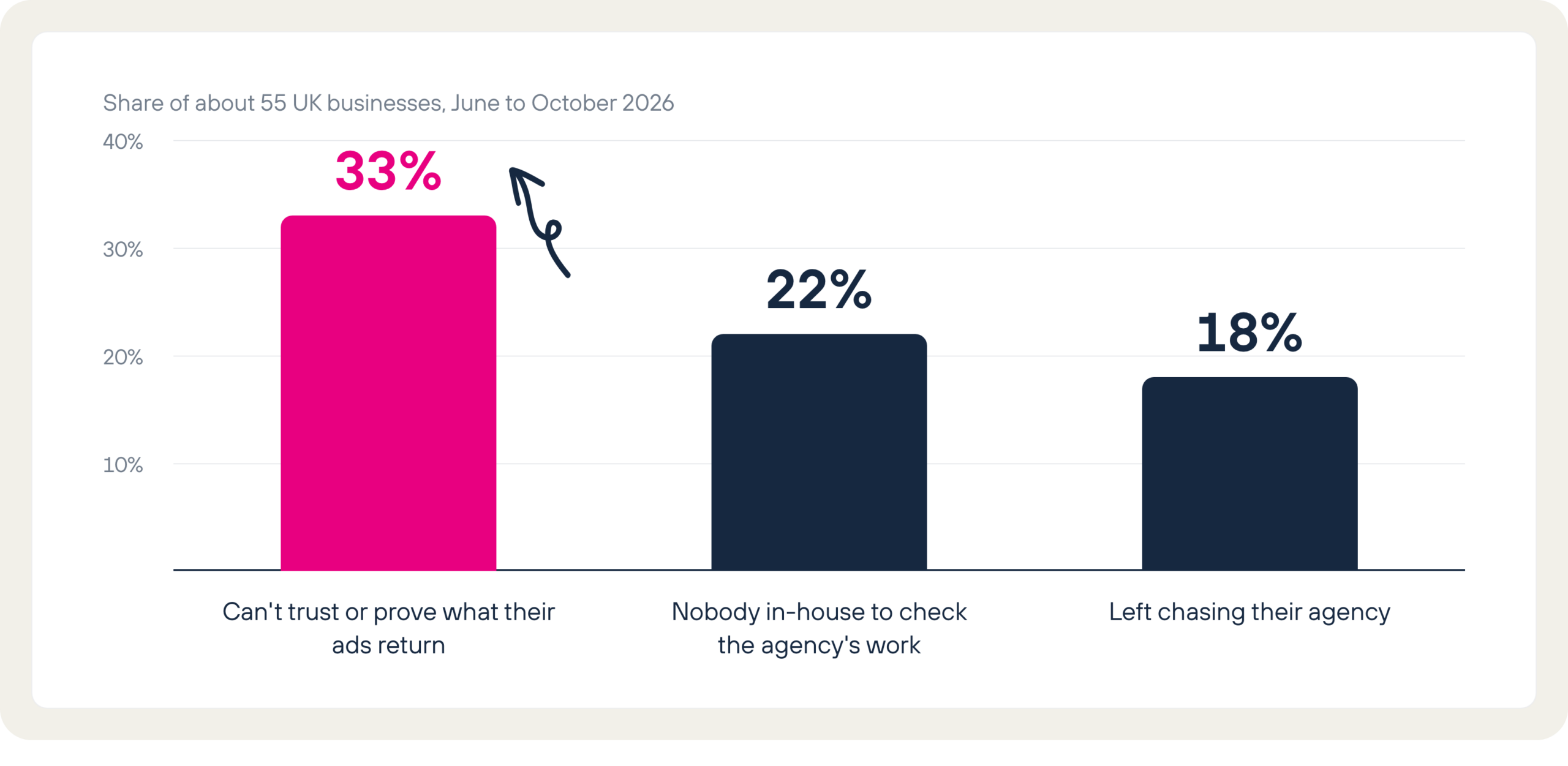
Between June and October 2026, we spoke to about 55 UK businesses about their paid media. About a third of them (33%) couldn’t trust or prove what their ads returned. It was the problem we heard most. About one in five (22%) had nobody in-house who could check the agency’s work.
That frustrates me. Paid media is one of the most measurable things a business can buy. Nobody should be left guessing.
So here are the eight standards I hold every account to. My team works to them every day. Each one ends with a question you can put to your agency. Hold any agency to them. Including us.
1. Nail the basics before anything shiny
I’ll say it plainly: most of what moves performance is the basics, done well. A clear account structure. The right search terms. Strong ads and landing pages. Sensible budgets. Accurate tracking.
My rule for match types is simple. Exact leads. Phrase expands. Broad discovers, in its own campaign with a capped budget.
Google and Microsoft release new features all the time. A new feature is no reason to switch it on. On 1 September 2026, Google moved many broad match campaigns onto AI Max automatically. Your agency should have told you whether yours moved, and what it did about it.
We also pace our changes. Too many at once can reset the learning phase that automated bidding depends on. And a busy change history proves nothing. Activity is not strategy.
What to check: What did last month’s changes fix? And did your agency tell you about AI Max? Every change should have a reason you can follow.
2. Your account is yours, and you see everything
Your ad accounts, your data and your strategy documents belong to you. We don’t keep your ad accounts chained to our radiators. They’re yours. You own them.
You get direct access to every account we run. You also get a live Looker Studio dashboard, so you can see how your campaigns are doing whenever you want.
Transparency also means explaining our decisions. We report good months and bad months the same way, with the reasons behind both. And we say how sure we are. Every finding is marked confirmed, indicative, or waiting on data. What we can prove, we mark proven.
It also means knowing who else is in your account. Your account has many hands in it. Feed tools, asset suppliers, and your own team can all make changes. Your change history shows every one, and we check it.
What to check: Who owns your ad accounts? Who has changed your account recently?
3. You should never have to chase your agency
You should be able to talk to the people who run your campaigns. You get the specialists who manage your account, with an account manager alongside them.
We keep a regular rhythm:
- A call every two weeks on progress, budget pacing, risks, and anything we need from you.
- A monthly meeting on the numbers across your channels.
- A quarterly review that resets targets and sets a three to six month roadmap.
- Slack and email for quick questions and approvals in between.
This is the one that gets me most. Almost one in five of the businesses we spoke to (18%) said they were the ones chasing their agency. As one marketing lead put it: “It shouldn’t be that the client’s chasing the PPC company.” I couldn’t agree more.
If something goes wrong, you hear it from us first, with how we’re fixing it. The same goes for platform changes. Google’s ads in AI Mode reach the UK in Q4 2026, inside your existing campaigns. You should hear about that from your agency first. Here’s what to check before they land.
What to check: When did your agency last raise a problem or an idea before you asked?
4. Fight for growth your margins can afford
The job of paid media is to grow your business. We look for ways to increase sales and conversions, at a return your margins can support.
That works in both directions. Growth at any cost is a poor deal for you. So is a ROAS target that blocks every worthwhile opportunity. When reaching more customers needs a lower return, we bring you the numbers and we decide together.
We judge spend on what the next £1 returns. Brand searches and exact match can make the account average look better than it is. So we check where you’re losing impressions to budget, and where you’re losing them to ad quality. Each one needs a different fix.
Brand spend should be a decision too. We defend your brand when rivals bid on it, at peak times, or when your own results are weak. We switch on brand exclusions in Performance Max and Shopping where we can, so your brand searches don’t flatter those campaigns.
What to check: What does the next £1 return? Is your brand spend a decision, or a line nobody touches? Does your agency ever propose spending more, with a clear case for why?
5. No copy-and-paste plans. Ever.
Every business has different objectives, budgets, margins and challenges. Your strategy should start from yours.
In practice, we might split your products by order value, margin and product type, so each group gets the budget it earns. There’s no fixed split between Google and Meta. Instead, we split budget three ways: revenue we protect, growth we invest in, and tests we control. Budget moves between them when the results change. And a lead generation account gets a very different plan from a retailer.
I’d rather ask the right questions than arrive with the wrong answers. So every plan starts with what you know about your customers, margins, and stock.
What to check: Could your agency’s plan for you be pasted into another client’s account unchanged?
6. Know your business as well as your account
Google Ads and Microsoft Ads don’t tell the whole story. Where you can share them, we look at your margins, customer lifetime value and sales data. These show what is worth winning.
More conversions don’t always mean better results. A sale on a low-margin product can cost more to win than it earns. A 10x ROAS can still lose money once product, shipping and returns costs come off.
That’s why we run accounts against an agreed profit floor. Miss our agreed profit floor for one month and you can leave. I’m happy to be held to that. As a key ProfitMetrics partner, we can help bring your product costs into Google Ads, so bidding can favour the products that make you money.
For how to set a profit floor with your finance team, read a 10x ROAS can leave you penniless. For the costs that eat into ad returns after the sale, read the hidden post-sale costs that erode your margins.
What to check: Does your agency know your margins? Does it report anything beyond platform ROAS?
7. If the tracking’s wrong, everything’s wrong
Every decision in an account rests on its tracking. So it needs to be accurate, tested at setup, and checked regularly after that.
Platform data is a starting point. Google Ads, GA4 and your sales system often credit different sales to the same ads. Before we change a single bid, we agree one revenue number with you. That means deciding how VAT, returns, cancellations, and click and collect count. When the systems don’t agree, we find out why.
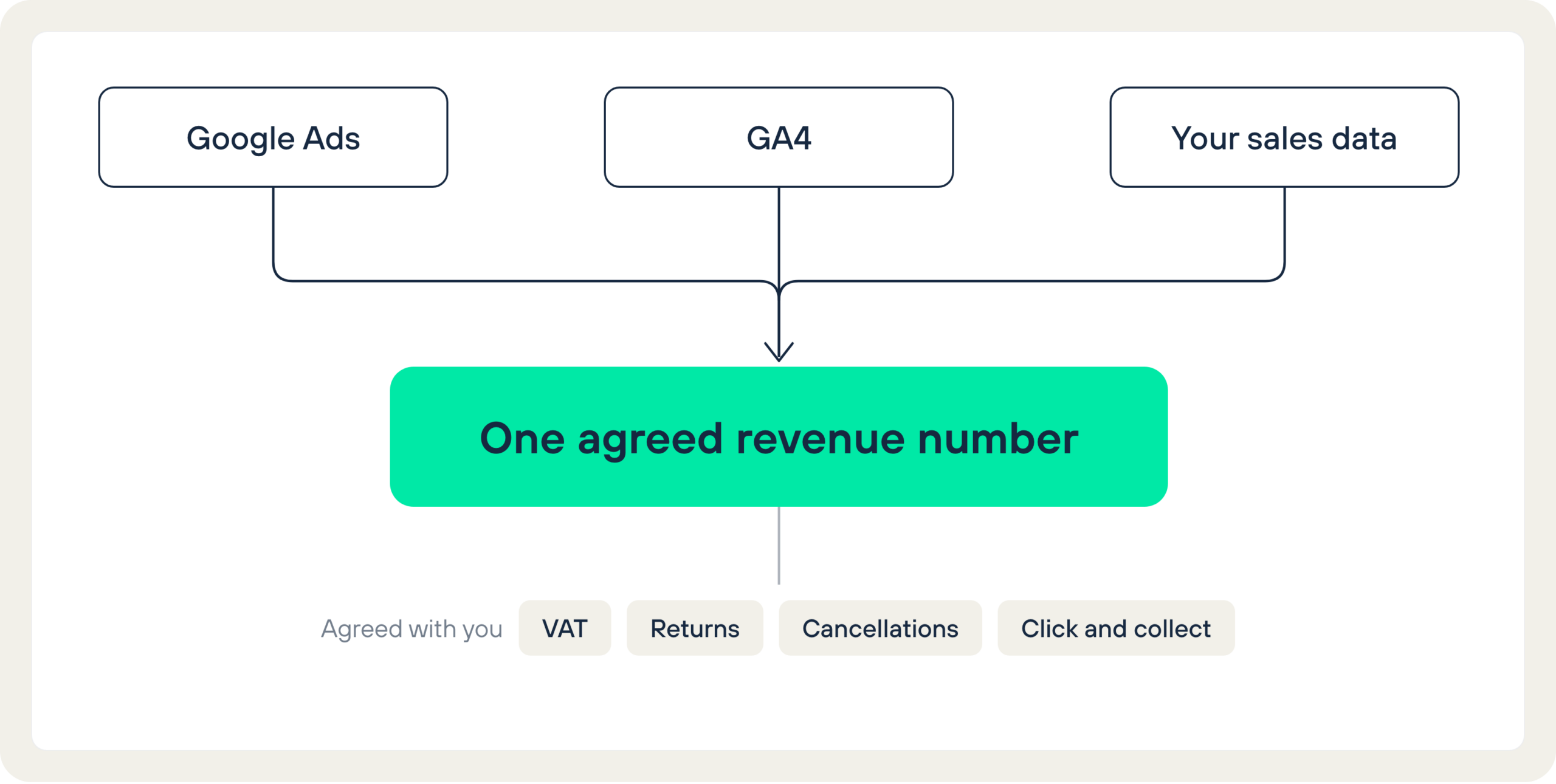
Timing matters too. Some sales land days after the click. So we review bidding targets every two weeks, allowing for that delay, rather than reacting to data that is still coming in.
The rules keep moving. Since 15 June 2026, Consent Mode has been Google Analytics’ single control for ads data. If your consent set-up is wrong, your ads data is wrong too.
The right set-up depends on your account. It can include enhanced conversions, consent management, offline conversion imports, and server-side tracking.
For the basics, read what PPC tracking is and why it matters.
What to check: Do you and your agency agree on one revenue number? Are targets changed before the data settles? When was your conversion tracking last tested?
8. Never let an account just tick over
We review performance regularly and challenge our own assumptions. Every account we run is monitored in Optmyzr, with alerts sent to our team in Slack, so we spot changes early.
We test where it makes sense. Each test starts with a hypothesis and a measure of success, so every result teaches us something. When something isn’t working, we change direction.
The person running your account owns the quality of the work. Keeping an account ticking over doesn’t meet my standard. It never will.
For where improvements come from, read the best PPC optimisation strategies.
What to check: What has your agency tested in the last three months, and what did it learn?
Now score your own account
Answer each question with “clear”, “unclear”, or “don’t know”.
- What did last month’s changes fix, and did your agency tell you about AI Max?
- Who owns your ad accounts, and who has changed them recently?
- When did your agency last raise something before you asked?
- What does the next £1 return, and is your brand spend a decision?
- Could its plan for you fit another client unchanged?
- Does it know your margins?
- Do you agree on one revenue number, and are targets changed before the data settles?
- What did it test in the last three months?
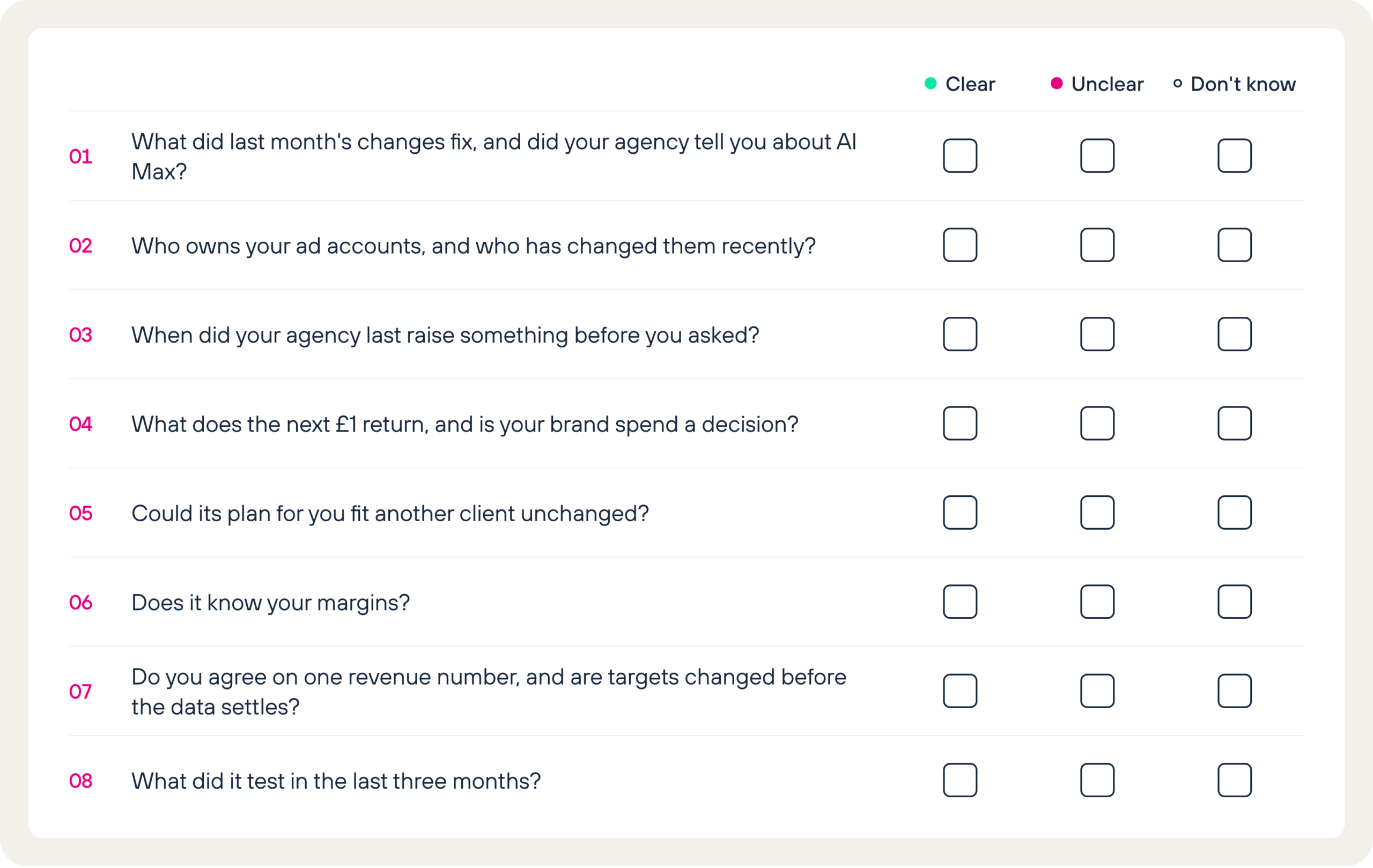
Three or more “unclear” or “don’t know” answers? It may be time for a second opinion. I’d be glad to give you one.
Want your account held to these standards?
Get our thinking on search, every Friday.
Campaign breakdowns, what is actually shifting in search, and the numbers behind the work. One email each Friday, and one click to leave.